

Some links in this post are affiliate links — if you purchase through them, I may earn a small commission at no extra cost to you.
I didn’t get into plants because I wanted a wellness routine. I got into plants because my apartment felt like a sad beige box and I thought a golden pothos might help.
It did. But it also did a lot more than that.
Somewhere between learning not to overwater and figuring out why my monstera kept getting crispy edges, I realized I was actually… feeling better? Like, noticeably. And I hadn’t changed much else.
That sent me down a rabbit hole. Turns out there’s actual science behind it — and it connects to a bigger conversation I’ve been having on the wellness side of this site about finding routines that don’t feel like homework.
The Biophilia Thing Is Real
There’s a concept called biophilia — the idea that humans are biologically wired to connect with living systems. Plants, nature, green things. Our nervous systems literally respond to them.
Research supports this: indoor plants have been linked to lower cortisol levels, improved mood, reduced anxiety, and better focus. That’s not just “plants are pretty.” That’s your stress hormone going down because you’re near a living thing.
And if you’re someone like me who spends way too much time indoors — which, hi, Colorado winters — houseplants might be one of the easiest nature fixes available. A review of 42 studies found that just being in the presence of indoor plants can improve mental and physical health. You don’t even have to tend them. Just having them around does something.
How My Plant Routine Actually Works
I’m not going to pretend I have some beautiful, Pinterest-worthy morning ritual. It’s not that deep.
But I do have a loose routine that’s built itself over the past couple years. Here’s what it actually looks like:
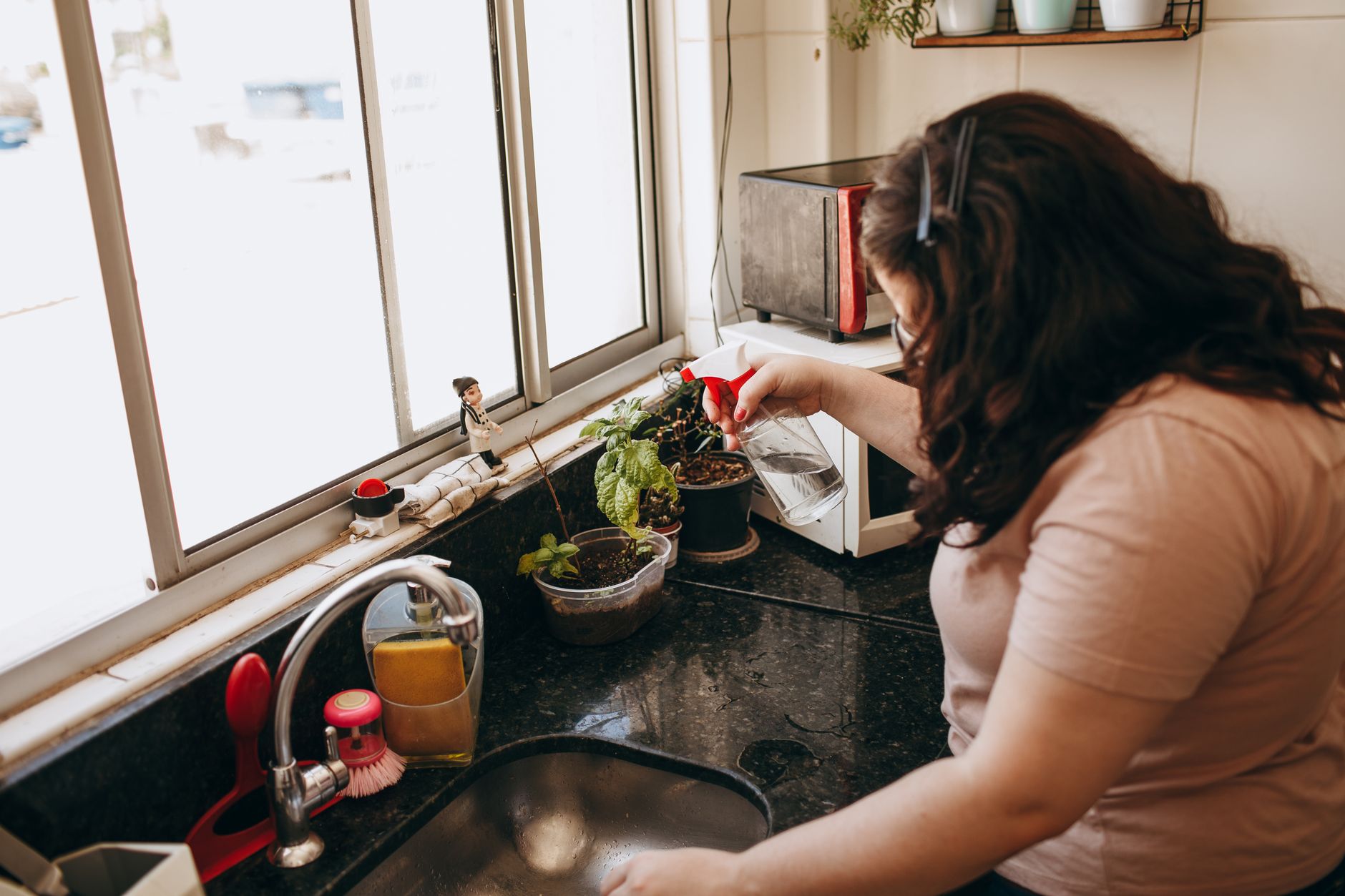
- Sunday morning water check. I go plant to plant, stick my finger in the soil, decide who’s thirsty. Takes maybe 15 minutes. It’s weirdly meditative.
- Weekly wipe-down. Dust on leaves is more than aesthetic — it blocks light. Wiping them down is a small act of care that somehow makes me feel like I have my life together.
- Monthly check-in. Look for new growth, check for pests, decide if anyone needs a bigger pot. This is my slow Sunday activity when I don’t want to stare at my phone.
- Propagation projects. When I need something to do with my hands, I’ll take a cutting. I’ve got a whole guide to propagating snake plants and another on propagating pothos if you want to try it — it’s satisfying in a way I didn’t expect.
None of this is intense. That’s kind of the point.
Why It Works as Self-Care (For Me, Anyway)
Self-care gets thrown around a lot. Most of the time it means “buy something” or “take a bath.” Which, fine. But what I’ve found with plants is that the mechanism is different.
It’s about consistency and attention. You have to show up for your plants — not dramatically, but regularly. And that quiet, repeated act of showing up for something else kind of trains you to show up for yourself.
Healthline put it well: caring for plants reduces psychological and physiological stress because the interactions promote comfortable, soothing emotions. It’s not a cure-all. It’s just… a soft reset. A few minutes where you’re focused on something alive and uncomplicated.
There’s also the fulfillment angle. Watching something grow that you’re responsible for — even a spider plant sending out a new pup — gives you a small but real hit of “I did that.” That matters more than it sounds when you’re in a stretch where everything feels stuck.
Starting Small: The Plants That Make This Easy
If you’re new to this and the idea of adding another thing to your plate sounds exhausting, I hear you. Start with one plant. Seriously, one.
Research from the University of Reading actually found that a single, carefully chosen houseplant may be all you need to lift your mood. More isn’t always better — especially if caring for too many becomes a source of stress rather than relief.
My recommendations for low-pressure starting points:
- Snake plant — Nearly indestructible. Tolerates low light and infrequent watering. Hard to kill even when you’re distracted.
- Golden pothos — Grows fast, trails beautifully, tells you when it’s thirsty by drooping a little. Great feedback loop for beginners.
- Jade plant — Slow-growing and satisfying. Succulents in general are a good low-maintenance entry point.
I’ve got a full breakdown of my top 3 beginner-friendly houseplants if you want more detail on any of these.
The Wellness Stack I’ve Built Around It
I’ll be honest — plant care is part of a bigger picture for me. It’s not the only thing I do to feel more grounded, but it’s become a consistent anchor in my day.
One thing I’ve been doing alongside my morning plant check is taking Shaklee’s B-Complex. B vitamins support nervous system function and energy levels — I’ve noticed I feel a bit more even-keeled on days I don’t skip it. Nothing dramatic, just steadier. It’s one of those quiet supplements that I keep coming back to.
Pairing something that supports you from the inside with something like plant care that resets you from the outside — that’s kind of the approach I’ve landed on. Low effort, repeatable, sustainable.
It’s Not Magic. It’s Just Consistent.
I’m not saying houseplants will fix your anxiety or solve a hard season of life. They won’t. But I do think they offer something real — a repeatable moment of calm, a reason to slow down, and proof that small, daily acts of care actually compound.
You water a plant. The plant grows. You did that.
Some days that’s enough to remind you that showing up, even in small ways, matters.
If you’re curious about building more of this kind of low-key wellness routine, I write about it over in the wellness section. It’s not about optimization or biohacking — it’s just figuring out what actually helps.
If you dig plants and wellness tips, I send a weekly newsletter — join The Green Wellness Weekly here.
Get plant care tips & wellness ideas — join The Green Wellness Weekly.
Leave a Reply